

Your battery earns money when HEMS runs it
Automatically decides when to charge the battery and when to power your home. It looks at electricity prices, your tariff and the solar forecast. It controls on site, in your home, and shows the profit in the app.
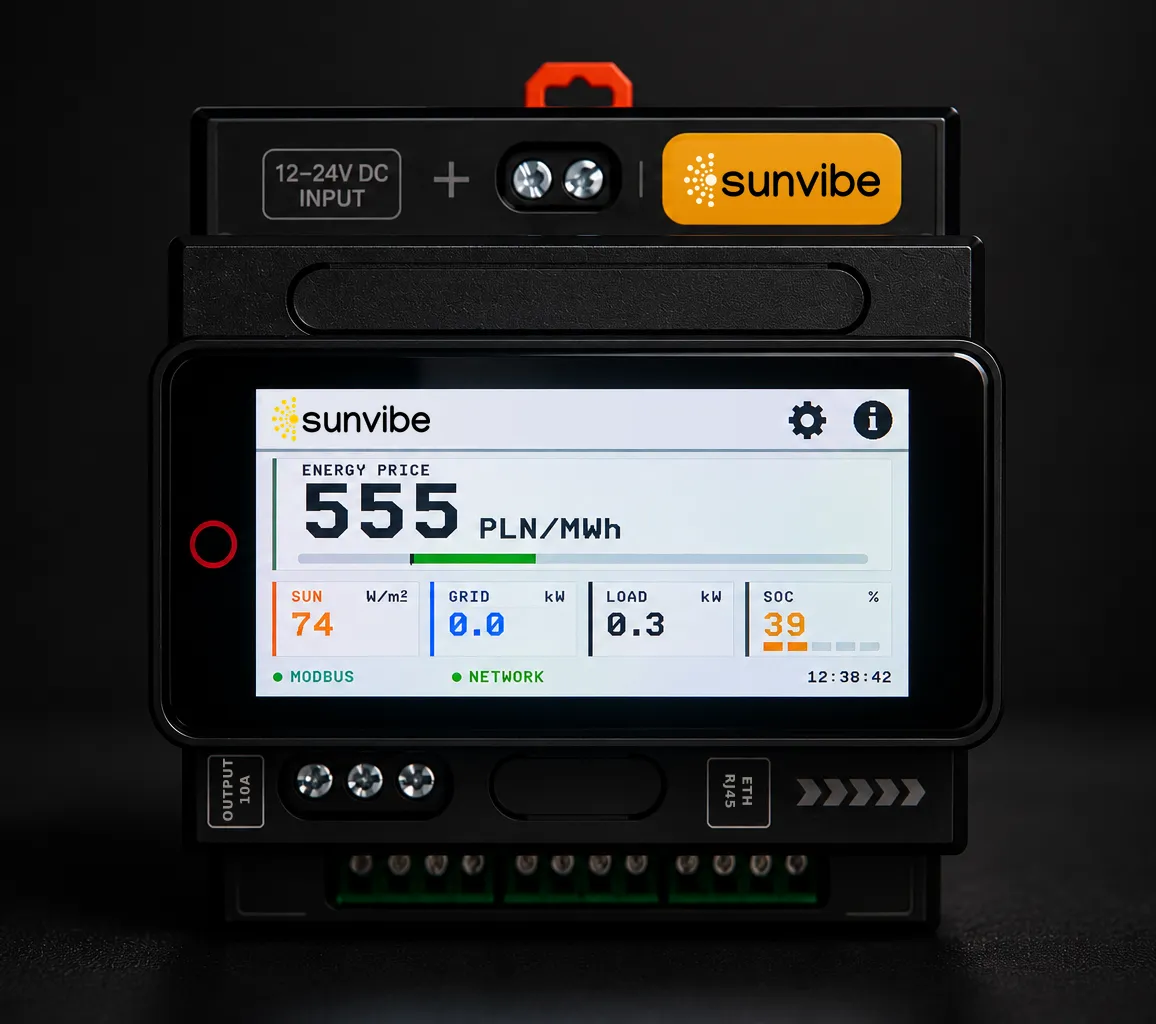
PME2 subsidy compliant. Works with any tariff.
- PME2 subsidy compliantMeets the EMS rules of Poland’s subsidy
- DSO integratorConnection to the grid operator
- Any tariffZone, dynamic, net-billing
- No constant internetControls locally, at home
- Multiple inverters and batteriesOne controller for the whole system
- Blackout reserveA reserve the battery keeps
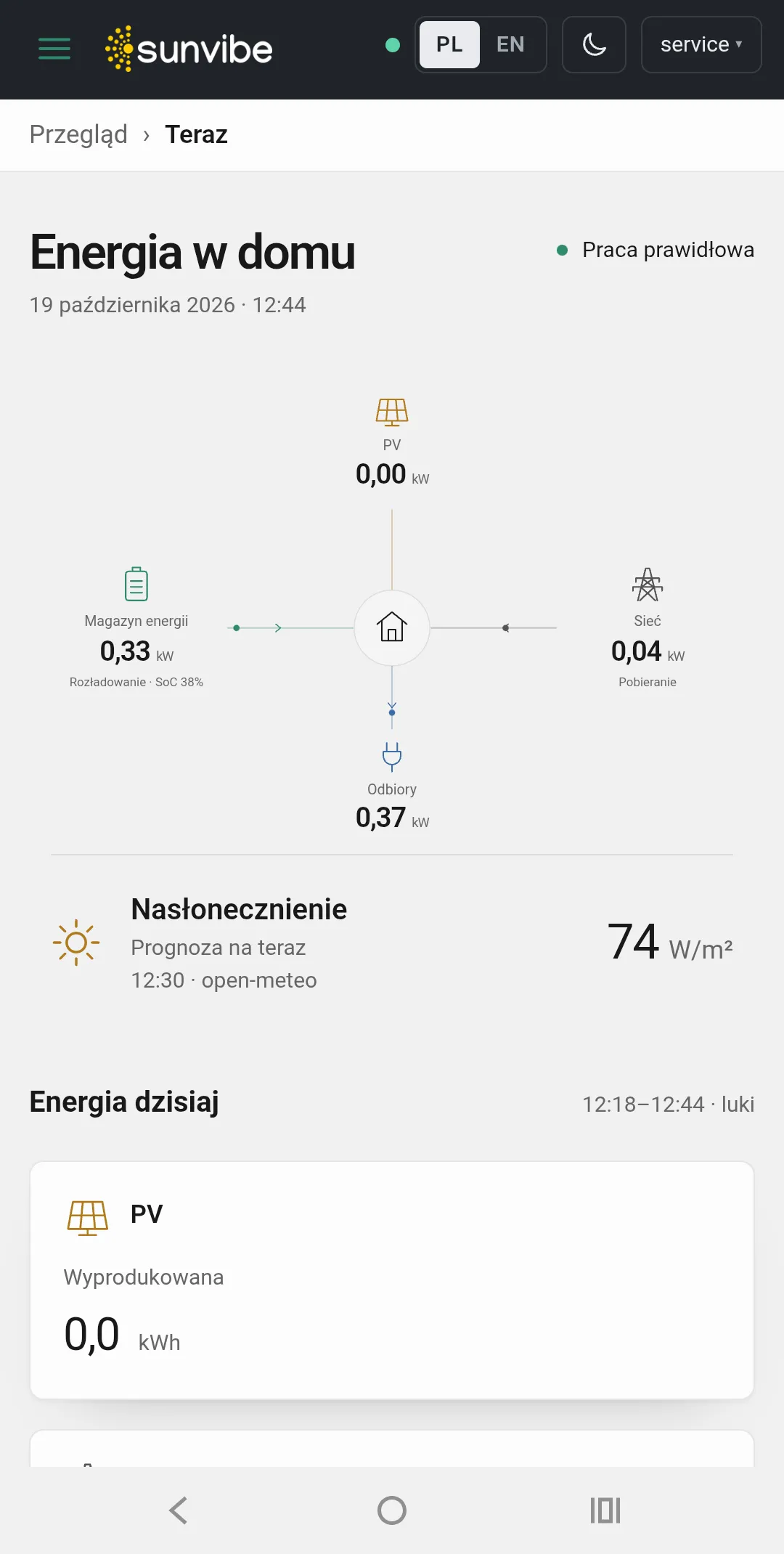
- App and touchscreenPhone, computer and controller
- Home AssistantIntegration out of the box
Works with inverters and batteries from






Names and trademarks belong to their owners.
See the profit from smart control in the dashboard. Tomorrow’s plan too.
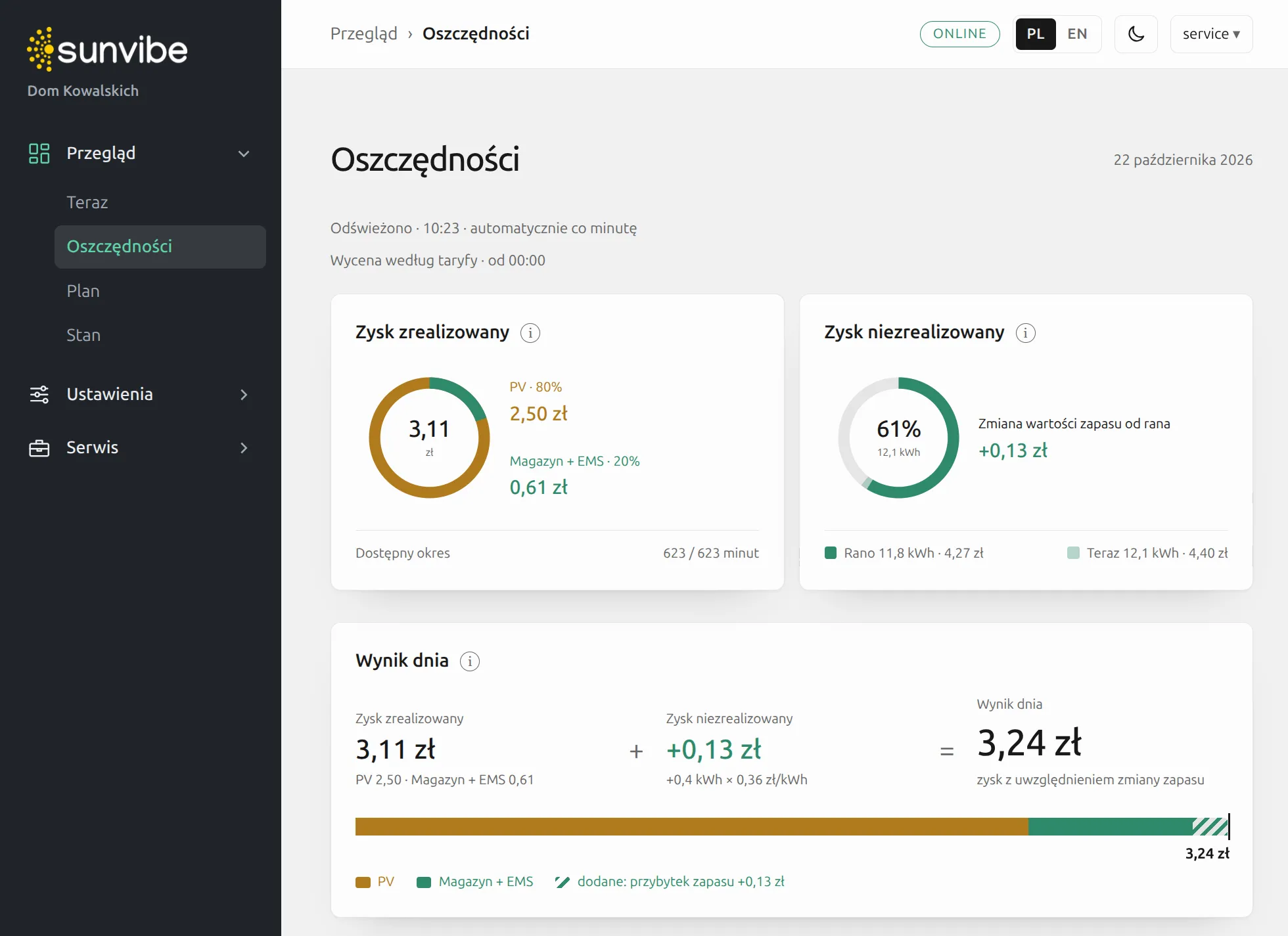
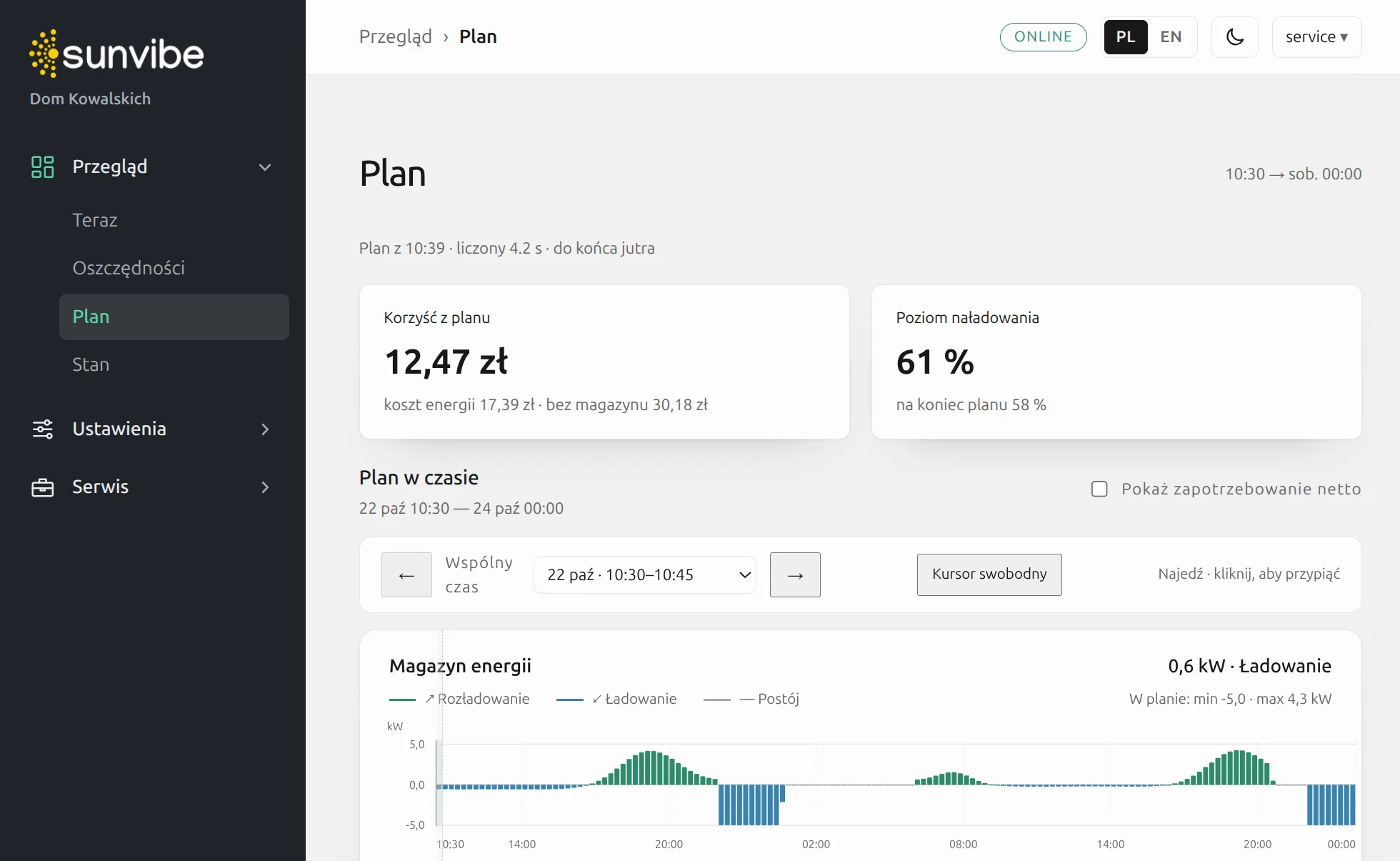
The summary shows what the battery earned, separately for solar and for the battery with EMS. The battery plan for today and tomorrow is set by the sunvibe AI Planner, and the dashboard shows what it will do in the coming hours.
 123
- Profit realised today, solar and battery with EMS separately
- Value of the energy stored in the battery
- Day result: both combined, with the calculation
 123
- Benefit of the plan compared with no battery
- State of charge now and at the end of the plan
- Charging and discharging power every 15 minutes, to the end of tomorrow
Check whether your EMS can do this
Below: features you will not find in a typical home battery EMS.
| Feature | sunvibe | Typical EMS |
|---|---|---|
| Optimised for any tariffG11, G12, G12w, dynamic, net-billing | — | |
| Production and load forecastPlan to the end of the next day | ||
| Negative price protectionEnergy stays in the battery | ||
| Local control, no constant cloudInternet once a day | — | |
| Blackout reserveA reserve the battery keeps | — | |
| Multiple inverters and batteries of mixed brandsOne controller for the whole system | — | |
| Automatic and manual controlRemotely from the app | ||
| Only in sunvibe | ||
| Battery protectionCharging current chosen so the battery wears more slowly | — | |
| Inverter at peak efficiencyThe planner avoids low power levels where the inverter loses the most energy | — | |
| Profit calculatorProfit calculated live, solar and battery separately | — | |
| Battery plan in the appSee in advance when the battery will charge and discharge | — | |
| Touchscreen on the controllerCheck the readings at the battery, no phone needed | — | |
| Home AssistantIntegration out of the box | — | |
| Technology from PV farms and storage above 1 MWhThe same forecasting and control engine | — | |
Comparison with popular home battery EMS products available in Poland.
Compliant with the PME2 subsidy
Poland’s Home Energy Storage programme (NFOŚiGW) requires an EMS. sunvibe meets every point.
- 30% of costs, max PLN 800 per 1 kWh of capacity
- up to PLN 16,000 for the battery (net-billing)
- +PLN 2,000 for an EU-made inverter or battery
Condition: an EMS that meets the programme rules.
- Controls renewable energy flows by prioritiesHome load, battery, grid
- Controls battery charging and dischargingThe planner controls both
- Operates by time profilesA plan in 15-minute steps
- Analyses weather and economic dataProduction forecast, prices, tariff
- Cybersecurity: NIS2, CRA, RED DA, ETSI EN 303 645Manufacturer’s declaration of conformity
- Island-mode capabilityVia the inverter, with an energy reserve
The EMS cost is not an eligible cost. The installer enters the EMS name, type and functionality in the acceptance protocol; we provide the description.
Connected in one day
- 01
The installer connects the controller
It goes to the inverter and the battery.
- 02
You pick your tariff
In the app you set the tariff and the outage reserve.
- 03
In the morning you see the plan
From then on the battery runs by itself.
Are you an installer?
Partner programmeEMS for home batteries: frequently asked questions
What is an EMS for a home battery?
An EMS (energy management system, also called HEMS at home) decides when your battery charges and when it powers your home. It takes into account energy prices, your tariff, the solar production forecast and your household consumption. Without an EMS a battery just stores surplus energy. With one, it starts to pay for itself.
Do I need an EMS for the PME2 battery subsidy?
Yes. Poland’s Home Energy Storage programme (part 2, NFOŚiGW) requires an EMS that controls charging and discharging by time profiles and analyses weather or economic data. A monitoring app alone is not enough. sunvibe meets these requirements; the breakdown is higher on this page. The EMS cost is not an eligible cost. Check current terms on the programme page.
Does an EMS pay off with a dynamic tariff?
A dynamic tariff changes the price every hour, so the biggest savings go to those who shift consumption to cheap hours. The EMS does this automatically: it charges the battery when power is cheap or negatively priced and powers your home from the battery during the evening peak.
Does sunvibe work without internet?
You need internet once a day to download energy prices and the weather forecast. Then sunvibe runs by the plan. A constant cloud connection is not required.
How is a home EMS different from an EMS for solar farms?
In scale. The technology is the same one sunvibe uses to run PV farms above 1 MW and storage above 1 MWh.
Will sunvibe work with my inverter and battery?
The list of brands is higher on this page. If your model is not there, ask in the form and we’ll check.
Who installs sunvibe?
A solar installer connects the system, ideally the one who installed your PV system. If they don’t work with us yet, they can join our partner programme. If you don’t have an installer, get in touch.
Request an offer
Leave your email and, if you know it, your inverter and battery brand. We will reply with an offer and confirm compatibility.